 Job
Category
Interview Preparation
Interview Preparation guides on Job Guide Daily.
Post-Interview Follow-Up Email: Templates That Work
A post-interview follow-up email is a short, specific message sent within about 24 hours that thanks the interviewer, restates why you fit, and confirms the next step. It will not rescue a weak interview, but it keeps you easy to say yes to while a hiring team compares candidates.
Marcus Lee · 8 min read
15 Smart Questions to Ask Your Interviewer
The questions you ask at the end of an interview are how you find out what the job is really like before you commit to it — the hours, the tools, who actually pays you, and how the rate is set. This guide gives you 15 questions worth asking, grouped by what they uncover, plus what to verify in writing before you accept anything.
Ananya Rao · 8 min read
10 Red Flags to Watch For in Any Job Interview
A job interview is a two-way check. The clearest warning signs are not nerves or a blunt manager — they are a company that cannot describe the work, will not put pay in writing, or asks for money, bank details or free labour before a signed offer exists.
Wei Chen · 8 min read
Salary Negotiation Scripts That Win Higher Offers
Salary negotiation is a short, structured conversation that usually happens once — between a verbal offer and a signed letter. The scripts that work are not clever lines: they are one specific number, backed by published pay data, delivered with a reason attached.
James O'Connor · 8 min read
Virtual Interview Tips: Setup, Lighting, and Etiquette
A virtual interview is judged on two things at once: what you say, and how easily the interviewer can see and hear you say it. Most of the controllable part is setup — a quiet room, a camera at eye level, light in front of you rather than behind, a tested connection, and a backup way to keep talking if the video fails. This guide covers the kit, the framing, the on-camera etiquette, and what to check before you accept the job.
Nadia Hassan · 8 min read
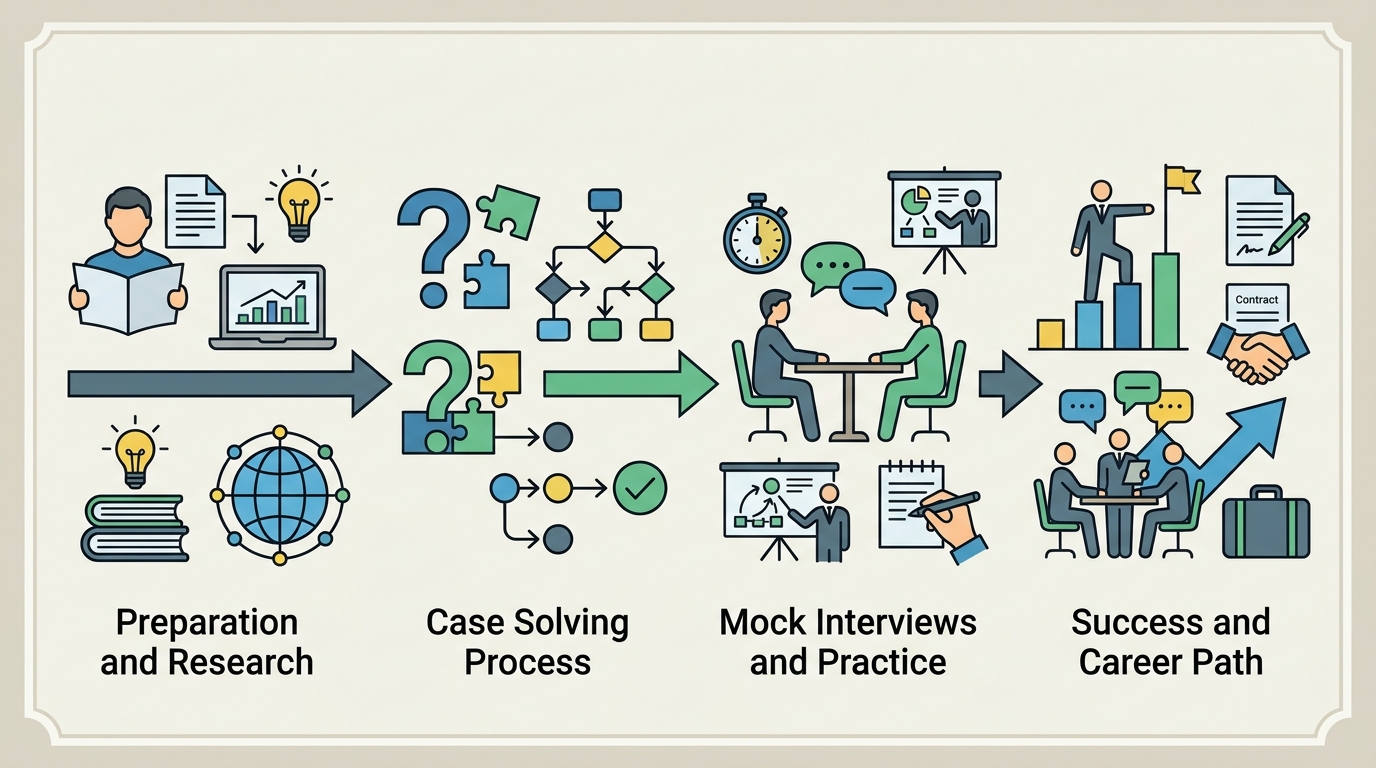
Case Interview Guide: How to Crack Consulting Rounds
A case interview is a timed, conversational exercise in which a firm hands you a realistic business problem and watches how you structure it, question it and do the math out loud. In the US, most consulting processes pair that problem-solving round with a behavioural interview about your own experience, and some firms add an online test or simulation first.
Olu Adeyemi · 9 min read

30-Day Technical Interview Prep Plan (Free Checklist)
A 30-day technical interview prep plan works best built backwards from the jobs you are actually applying for: coding practice in weeks one and two, system and design questions in week three, full mock loops and behavioral answers in week four. This guide gives you that checklist, plus what the underlying US developer and QA roles involve, where employers hire for them, and how pay is usually structured so you can judge an offer when it arrives.
Sofia Bauer · 9 min read
How to Pass a Behavioral Interview at FAANG Companies
Behavioral interviews at the largest US tech companies are structured, scored against published values, and usually run as 45-minute conversations about things you have actually done. Passing one comes down to having a bank of specific stories, telling them in a consistent structure, and knowing which company tests behavior in a separate round and which tests it inside every round.
Daniel Ortiz · 8 min read

50 Most Common Interview Questions and How to Answer Them
Most US interviews recycle the same few dozen questions, and they fall into six predictable families: openers, behavioral "tell me about a time" prompts, self-assessment, role fit, logistics and closers. Build one story bank and three anchor answers and you can cover nearly all of them without memorising a script.
Priya Shah · 9 min read
STAR Method Explained: 20 Real Interview Answer Examples
STAR stands for Situation, Task, Action, Result — a four-part structure for behavioral interview questions like "tell me about a time you handled conflict." You pick one real situation, say what you were responsible for, describe what you personally did, and finish with an outcome someone else could verify.
Marcus Lee · 8 min read